
Obsidian: meaning, care, and everyday wear
A clear-eyed guide to volcanic glass: what it is, the symbolism often attached to it, and how to keep it looking considered.
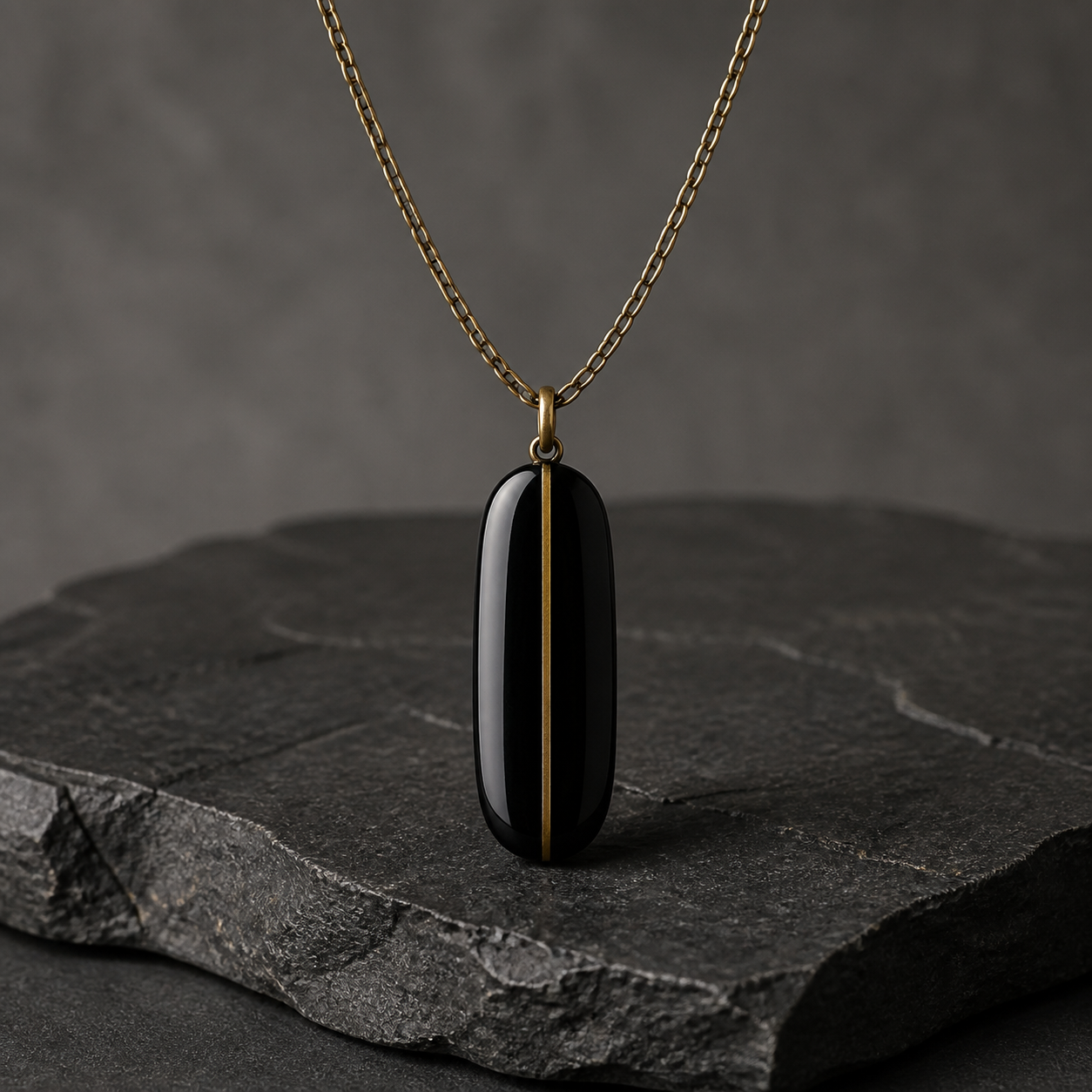
Obsidian has a visual directness that needs little embellishment. Its deep surface catches light at the edge, making it especially suited to simple, graphic forms.
A stone formed quickly
Obsidian is volcanic glass, formed when lava cools too rapidly for large mineral crystals to develop. That origin gives it a smooth texture and a dark, reflective appearance rather than the grain seen in many stones.
Natural variation is part of the material. Small differences in tone, surface, and translucency should be expected rather than treated as defects.
Meaning without a promise
Across contemporary jewellery, obsidian is often associated with protection, boundaries, and grounded attention. We treat those ideas as personal prompts, not as medical or supernatural claims.
A symbol works best when its meaning is chosen by the wearer. It can mark a decision, hold a memory, or simply make an everyday object feel more intentional.
How to care for it
Although obsidian feels substantial, its glass-like structure can chip if knocked against a hard edge. Store it separately and remove it before exercise, showering, or sleep.
- Wipe gently with a clean, soft cloth after wear.
- Avoid perfume, lotion, household cleaners, and prolonged moisture.
- Keep pieces separate so metal and stone surfaces do not scratch one another.
VORNEU shares cultural and personal context without making medical, therapeutic, or supernatural claims.
Objects in this story
Continue through material.
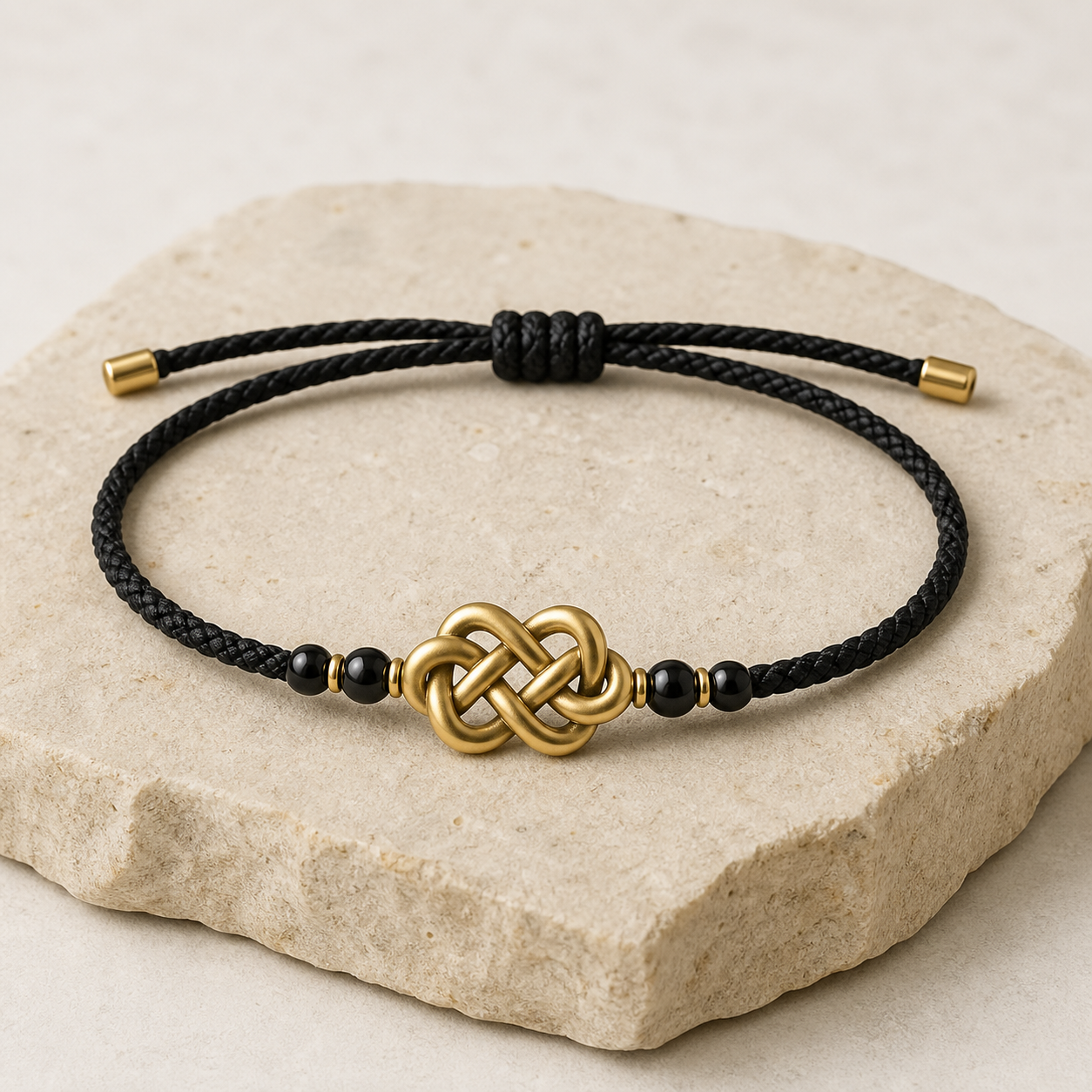
Gold vermeil, obsidian & woven cord
Sterling silver & polished obsidian
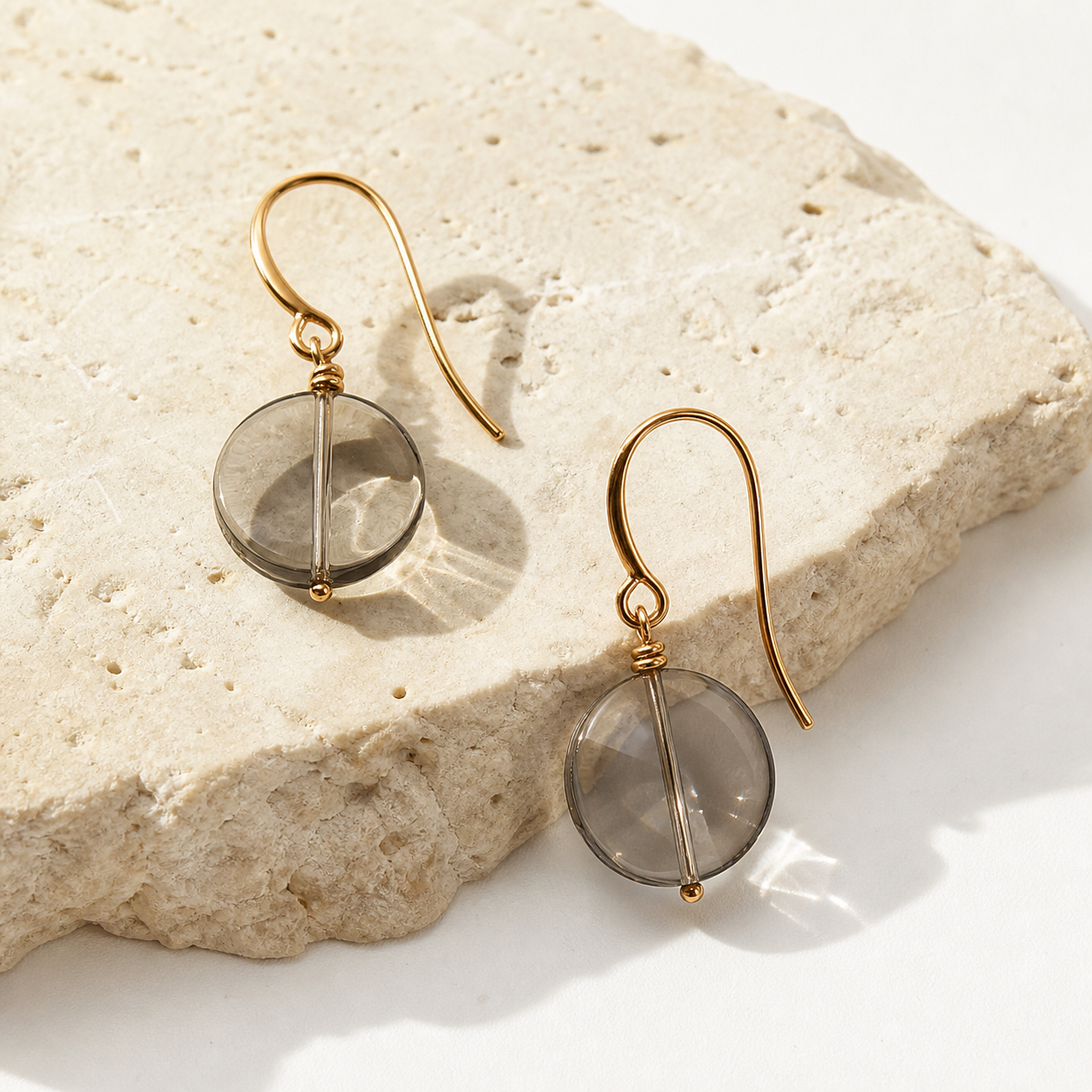
Rock crystal, obsidian & gold vermeil
Keep reading
More from the journal.
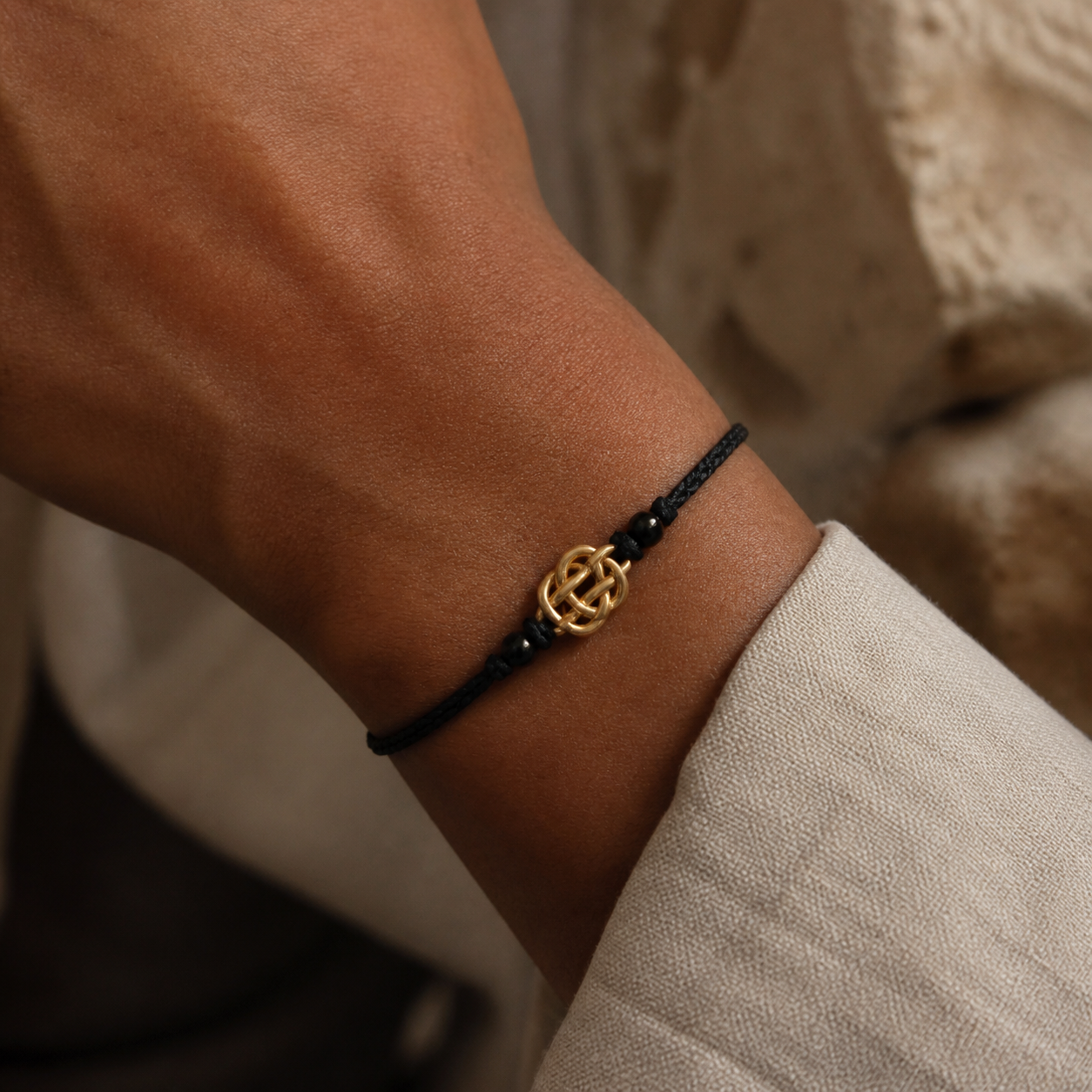
Why the endless knot still speaks to us
The thinking behind a continuous line, translated from a layered historical motif into a restrained object for daily wear.
Small rituals for a clearer beginning
Three grounded ways to begin again—without elaborate rules, forced optimism, or a perfect morning routine.